Wall Spray Foam Insulation
The wall facing west or south in a Glendale home absorbs a heavy dose of direct sun for hours every afternoon — spray foam fills and seals that stud cavity completely instead of just filling it.
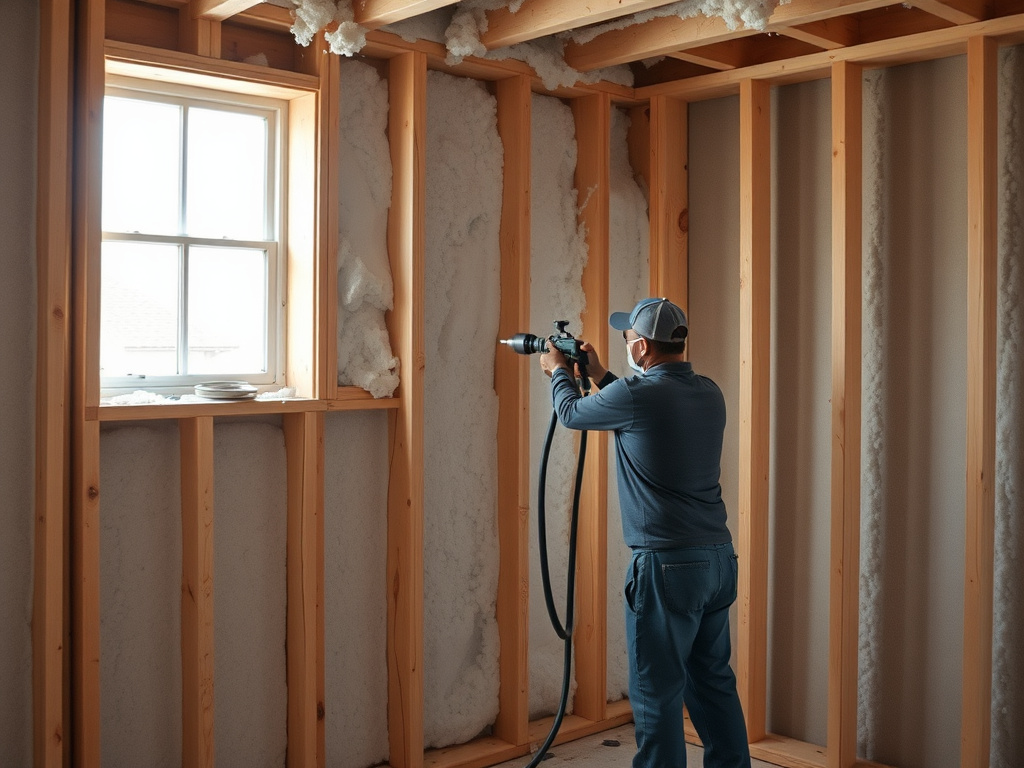
Once you get past the roof, exterior walls are the next-biggest sun-exposed surface on the house, and in the West Valley that mostly means west- and south-facing walls carrying the heaviest radiant load through the back half of the day — a real factor in golf-course-lot homes around Arrowhead Ranch with large window walls facing the fairway, and in older Catlin Court-area homes where additions have opened up new wall framing. A standard fiberglass batt fills the cavity but doesn't seal it — outlets, top and bottom plates, and the seam where stud meets drywall all stay open as paths for heat and outside air. Spray foam fills the same cavity and seals it in the same pass, and that's the part that actually changes how a room feels by mid-afternoon.
There's a sound-dampening angle worth mentioning too, especially for homes closer to the Westgate Entertainment District or State Farm Stadium corridor where event nights bring extra traffic and noise: open-cell foam in particular absorbs sound in a way a hollow, batt-filled cavity doesn't. Wall foam works cleanly on new construction with open studs and on additions or remodels where the wall is already opened up for other work. We generally don't recommend demolishing finished walls purely to add insulation — that's a big, disruptive project for a smaller thermal gain than something like attic insulation — but if a wall's already open, upgrading to foam instead of batts is a straightforward call.
Why homeowners choose it
- Fills stud cavities completely and seals around outlets, plates, and framing gaps that batt insulation leaves wide open.
- Cuts radiant heat transfer through west- and south-facing walls, which absorb the heaviest direct sun exposure in a Glendale home.
- Adds genuine sound dampening against street and event-venue noise, a real secondary benefit alongside the thermal performance.
- Won't settle or shift inside the cavity over the life of the home, unlike batts that can slump or compress after years in the wall.
- Performs equally well on new-construction framing and open-stud remodel or addition work.
New-builds vs. additions: when wall foam makes sense
New construction is the cheapest time to spray a wall — the studs are open, there's no finished surface to protect, and access is simple. In an existing home, wall foam makes the most sense when a wall is already open for a remodel, addition, or repair. We don't recommend tearing into finished drywall solely for insulation; the cost and disruption rarely pencil out against what you'd gain compared to a project like attic insulation, which usually delivers a bigger return for less disruption.
Ideal for
- New-construction homes with open wall framing
- Additions and remodels where the wall is already opened for other work
- West- and south-facing exterior walls carrying the heaviest sun exposure
- Homes near event traffic or busy corridors where sound dampening matters alongside heat control
What affects the cost
Wall Insulation questions, answered
Generally we only recommend it for walls that are already open — during new construction, an addition, or a remodel where the drywall is coming down anyway. Opening up finished walls solely to insulate is a significant, costly project, and for most Glendale homes, attic insulation delivers a bigger heat reduction for the money. We'll be straight with you about which upgrade makes sense for your situation.
Yes, particularly open-cell foam — its structure absorbs sound rather than letting it pass through the way a hollow batt-filled cavity does. For a wall facing a busy road, a shared wall with the garage, or a home closer to event-night traffic near Westgate, that's a real secondary benefit on top of the thermal improvement.
Wall Insulation done right, by a local West Valley crew
Wall Insulation isn't a commodity — the result depends entirely on how carefully it's planned and installed for your specific home and Glendale's real desert climate. We assess what your house actually needs, prep and air-seal properly, and install to your Zone-2B-appropriate R-value target, so the work delivers the comfort and savings it's supposed to.
We serve Glendale, Peoria, Surprise, Sun City, Sun City West, El Mirage, Litchfield Park, and Avondale. Every job starts with a free, no-pressure quote.
Just as important, we treat your home like the system it is. Insulation, air sealing, and ductwork all interact, and getting one right while ignoring the others leaves comfort and savings on the table. When we scope your wall insulation, we look at how it fits the whole picture — so the finished result performs the way it should, holds up through a genuine West Valley summer, and actually lowers the bills you feel every month.
Free assessment
We evaluate your home and give you a clear, itemized quote.
Expert install
We prep, air seal, and install your wall insulation to spec — clean and on schedule.
Savings you can feel
A cooler home, lower cooling bills, and honest advice about what your home needs.
Related services
Ready for a free wall insulation quote?
Tell us about your home and we'll put together a clear, no-pressure spray foam insulation quote — built for Glendale's real desert heat.