Attic Spray Foam Insulation
Before an under-insulated Glendale home even turns on its AC in July, the attic has already lost the battle — this is where that changes.
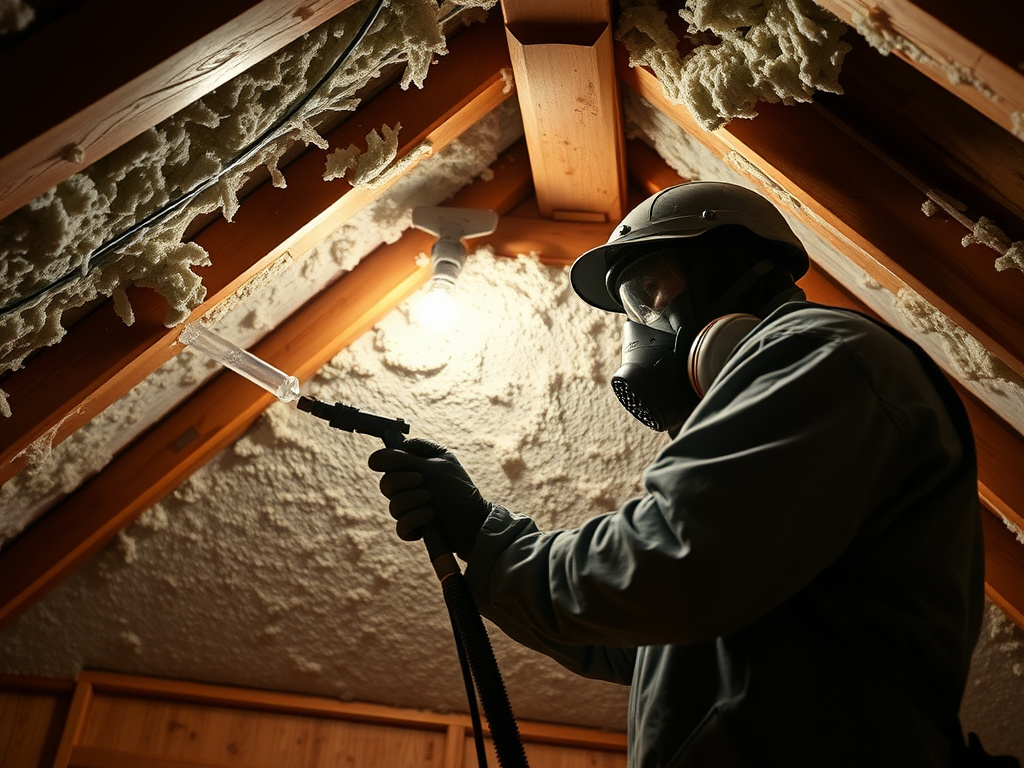
On a August afternoon in the West Valley, an unshaded roof deck can push attic temperatures above 150°F, and every degree of that heat is looking for a way into your living space below. In a home with thin, compacted, or gapped attic insulation, it finds one. The Department of Energy's guidance for hot-dry Zone 2 homes calls for attic insulation somewhere between R30 and R60 depending on your starting point, and plenty of Glendale attics — especially in older Historic Downtown and Catlin Court-area homes — never got close, or have settled well below their original rating over the decades. Arizona's energy code does allow a step-down to R30 when it's paired with a qualifying cool roof under IECC §R402.2.5, but that's a specific code path, not a default, and most homes without a cool-roof assembly still need to hit the fuller R-value range to perform the way the code intends.
What makes spray foam different from a batt or blown-in top-up isn't just the R-value — it's that foam insulates and air-seals in the same pass. Batts get laid across the joists and simply sit there, leaving every duct boot, top plate, and wiring penetration open as a path for superheated attic air to leak straight into your ceiling. Foam expands into those gaps and closes them. We install both attic-floor coverage, where the vented attic stays as-is and foam goes down between the joists, and roof-deck coverage, where we spray the underside of the roof deck itself to pull the whole attic inside the home's conditioned envelope — the stronger option if your ductwork runs through the attic, which is standard in most Glendale-area construction. A free on-site assessment is how we figure out which one actually fits your roof.
Why homeowners choose it
- Targets the single largest heat-gain surface on a West Valley home — the roof deck and attic floor take the most direct, sustained summer sun of anywhere on the structure.
- Combines insulation and air-sealing into one application, closing the duct-boot, top-plate, and wiring gaps that batts are physically incapable of sealing.
- Roof-deck application pulls attic-housed ductwork inside the conditioned envelope, cutting the conductive heat gain ducts absorb from sitting in a 150°F+ attic.
- Holds its shape and R-value over decades — it won't compress, sag, or shift the way blown-in fiberglass does after years of daily heat-cycling.
- Directly reduces AC cycling and runtime, the biggest line item on most Glendale summer electric bills.
Two ways to insulate an attic: roof deck or attic floor
Attic-floor coverage is the more traditional route: foam goes between the ceiling joists, the attic itself stays vented and unconditioned, and the living space below gets insulated from the heat above it. It's the lower-cost option and a solid fit when ductwork isn't a factor.
Roof-deck coverage sprays foam directly onto the underside of the roof deck and gable ends instead, converting the attic into conditioned, semi-living space. This is the better call whenever HVAC equipment or ductwork lives in the attic, since it shields that equipment from extreme attic temperatures rather than working around it.
- Attic-floor: lower upfront cost, attic stays vented
- Roof-deck: shields attic-mounted HVAC, higher cost, best when ductwork runs overhead
Picking open-cell or closed-cell for your roofline
We use both in Glendale attics depending on the job. Closed-cell packs more R-value into less depth, which counts when roofline framing is shallow, and it stiffens the roof assembly as a side benefit. Open-cell costs less per board foot and covers large attic-floor or roof-deck areas efficiently where depth isn't the limiting factor. A hybrid approach — a thin closed-cell layer for air and moisture control, open-cell filling the rest of the cavity — is common on bigger jobs. We'll walk your specific roof framing before recommending one.
Ideal for
- Homes with visibly thin, compressed, or patchy attic insulation
- Homes with HVAC ductwork routed through an unconditioned attic
- Older homes in Historic Downtown Glendale and surrounding established neighborhoods
- Homeowners noticing a hot second floor or an AC system that won't keep up in summer
What affects the cost
Attic Insulation questions, answered
Spray foam in the Glendale area typically runs $1 to $5 per square foot installed, often averaging around $3 per square foot, with closed-cell landing at the higher end. Many attic jobs carry a minimum project charge before scaling with square footage and whether it's attic-floor or roof-deck coverage. A free on-site assessment is the only way to get a firm number for your specific attic.
For a home with thin, gapped, or settled attic insulation, it typically makes a real difference. Because foam air-seals as it insulates, it shuts down the pathways that let 150°F+ attic air and radiant roof heat reach your ceiling — and that infiltration is a major driver of AC runtime in West Valley summers. Industry estimates put realistic cooling-cost reductions in the 30-50% range for a poorly insulated starting point, though your actual savings depend on your home's condition going in.
Attic Insulation done right, by a local West Valley crew
Attic Insulation isn't a commodity — the result depends entirely on how carefully it's planned and installed for your specific home and Glendale's real desert climate. We assess what your house actually needs, prep and air-seal properly, and install to your Zone-2B-appropriate R-value target, so the work delivers the comfort and savings it's supposed to.
We serve Glendale, Peoria, Surprise, Sun City, Sun City West, El Mirage, Litchfield Park, and Avondale. Every job starts with a free, no-pressure quote.
Just as important, we treat your home like the system it is. Insulation, air sealing, and ductwork all interact, and getting one right while ignoring the others leaves comfort and savings on the table. When we scope your attic insulation, we look at how it fits the whole picture — so the finished result performs the way it should, holds up through a genuine West Valley summer, and actually lowers the bills you feel every month.
Free assessment
We evaluate your home and give you a clear, itemized quote.
Expert install
We prep, air seal, and install your attic insulation to spec — clean and on schedule.
Savings you can feel
A cooler home, lower cooling bills, and honest advice about what your home needs.
Related services
Ready for a free attic insulation quote?
Tell us about your home and we'll put together a clear, no-pressure spray foam insulation quote — built for Glendale's real desert heat.