Open-Cell Spray Foam Insulation
A two-component spray that expands roughly a hundred times its liquid volume on contact, filling every irregular cavity a batt would only bridge — and doing it at a lower cost per board foot than denser foam.
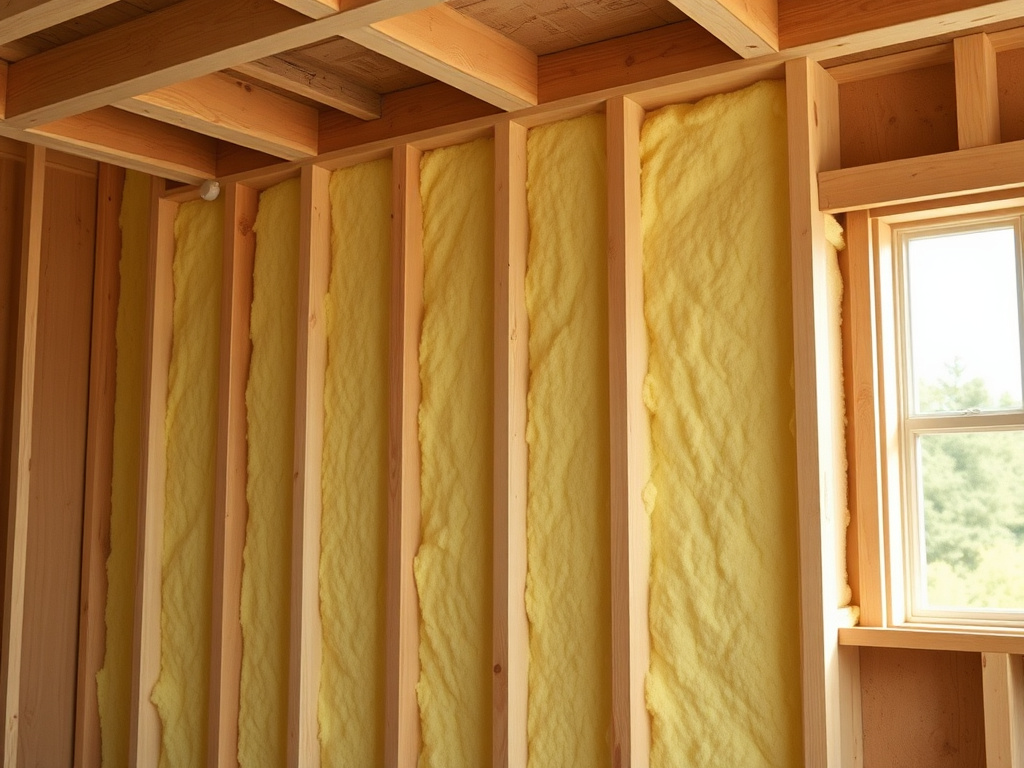
Open-cell spray foam starts as a liquid, gets applied through a heated hose, and expands dramatically within seconds of hitting a stud or rafter cavity — wrapping around wiring runs, plumbing stacks, and framing irregularities that fiberglass batts can only sit next to. Once cured, it forms a continuous, semi-rigid air barrier rather than a stack of separate insulation pieces. At around R-3.5 to R-4 per inch, it doesn't match the density of closed-cell foam, but the lower material cost per board foot makes it the practical choice for large-coverage jobs — a full attic floor, every interior wall in a house — where covering more square footage matters as much as maximizing R-value in a single cavity.
In a West Valley home, open-cell earns its keep inside the conditioned envelope: interior partition walls, attic floors in vented attics, and any dry, protected cavity that isn't taking direct weather exposure. It's a genuinely good fit for newer construction around Arrowhead Ranch and the Westgate corridor, where open interior framing during a remodel or addition makes access simple. Its cell structure also happens to absorb sound noticeably better than closed-cell or batt insulation — worth knowing if you're near event traffic on a State Farm Stadium or Westgate game night, or just want a quieter wall between a home office and the rest of the house. We'll go over whether open-cell, closed-cell, or a combination fits your project during a free on-site assessment.
Why homeowners choose it
- Expands into irregular framing cavities and fully wraps wiring and plumbing runs that batts can only sit alongside, not around.
- Insulates and air-seals in the same application, directly closing the infiltration paths that let desert heat and dust drift into a home.
- Provides meaningfully better sound absorption than closed-cell foam or batts — useful for interior walls, home offices, and rooms facing street or event noise.
- Lower material cost per board foot than closed-cell, which keeps larger interior or attic-floor projects more affordable.
- Cures into a stable, rigid structure that holds its performance for decades without sagging or settling.
Where open-cell fits in a Glendale home
Open-cell isn't a vapor barrier and it isn't meant for exterior-exposed assemblies — it's not the right call for every cavity in the house. But for dry, protected spaces inside the conditioned envelope, it insulates and air-seals efficiently at a lower cost than closed-cell foam.
- Interior walls separating rooms with different temperature or noise needs
- Vented attic floors with standard joist depth
- Walls and ceilings between the garage and living space
Ideal for
- Interior partition walls where sound dampening is a real priority
- Vented attic floors with adequate joist depth
- Home offices, media rooms, or bedrooms near street or event-venue noise
- Larger retrofit projects where cost per board foot is the deciding factor
What affects the cost
Open-Cell Foam questions, answered
Open-cell is lighter, less expensive per board foot, and delivers around R-3.5 to R-4 per inch — a strong fit for interior walls and sound dampening. Closed-cell is denser, delivers around R-6 to R-7 per inch, adds structural rigidity, and works as a vapor retarder — advantages that matter more on roof decks and exterior-exposed assemblies. For most Glendale interior walls and vented attic floors, open-cell is the more cost-effective pick.
It actually works in open-cell's favor. Because Glendale's climate is arid rather than humid, the moisture concerns that sometimes push other markets toward closed-cell everywhere aren't as pressing here for interior, protected cavities. What matters most for stopping heat infiltration in interior walls and vented attic floors is the air-sealing, and open-cell delivers that at a lower price point.
Open-Cell Foam done right, by a local West Valley crew
Open-Cell Foam isn't a commodity — the result depends entirely on how carefully it's planned and installed for your specific home and Glendale's real desert climate. We assess what your house actually needs, prep and air-seal properly, and install to your Zone-2B-appropriate R-value target, so the work delivers the comfort and savings it's supposed to.
We serve Glendale, Peoria, Surprise, Sun City, Sun City West, El Mirage, Litchfield Park, and Avondale. Every job starts with a free, no-pressure quote.
Just as important, we treat your home like the system it is. Insulation, air sealing, and ductwork all interact, and getting one right while ignoring the others leaves comfort and savings on the table. When we scope your open-cell foam, we look at how it fits the whole picture — so the finished result performs the way it should, holds up through a genuine West Valley summer, and actually lowers the bills you feel every month.
Free assessment
We evaluate your home and give you a clear, itemized quote.
Expert install
We prep, air seal, and install your open-cell foam to spec — clean and on schedule.
Savings you can feel
A cooler home, lower cooling bills, and honest advice about what your home needs.
Related services
Ready for a free open-cell foam quote?
Tell us about your home and we'll put together a clear, no-pressure spray foam insulation quote — built for Glendale's real desert heat.